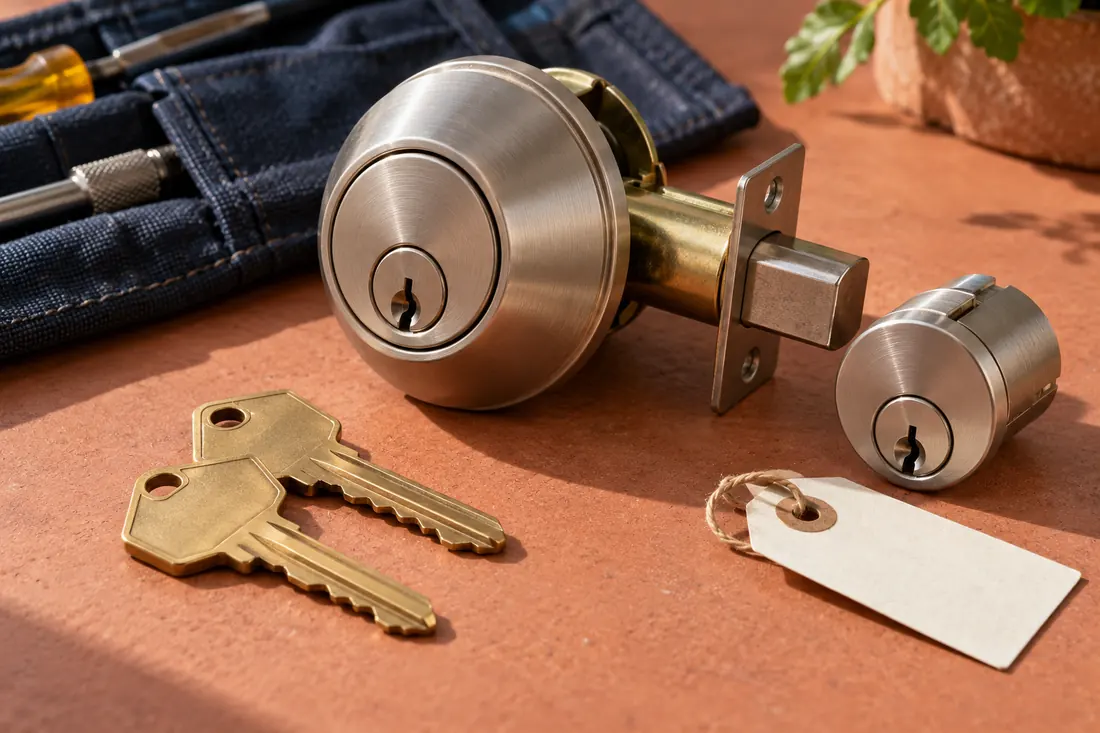
Know what rekeying does and does not change
Rekeying concerns the key cylinder. It does not repair a sagging door, restore a worn lever or add features the hardware never had. If the existing key is hard to turn, describe whether the problem occurs with the door open as well as closed. That distinction helps separate an access-control goal from a repair need. The final recommendation depends on inspection and compatibility.
Build a door list before the visit
For a Baltimore rowhome, consider the street entrance, rear door and any other exterior opening within your authority. For a business, identify the office, stockroom and tenant entrances separately. Write down which doors currently share keys and which should share them afterward. Different lock brands or cylinder formats may not be compatible with a single key, even when the handles look alike.
Coordinate rentals and shared entrances
A private apartment door and a common vestibule in Mount Vernon or Charles Village may belong to different access arrangements. Get the relevant owner or manager involved before changing either. If a property uses a master-key system, say so at the first call. Rekeying without understanding that system can interrupt approved access for other people, so the requested outcome must be clear.
Leave with a clear key plan
Confirm the number of new keys, who receives them and which openings were changed. Test every affected cylinder with the approved keys and check ordinary door operation. Old keys should no longer operate the rekeyed cylinders, but unrelated locks remain unchanged. Keep spare keys organized and record the agreed work so that a future lost-key request does not begin with an uncertain door list.