Name the opening before the hardware
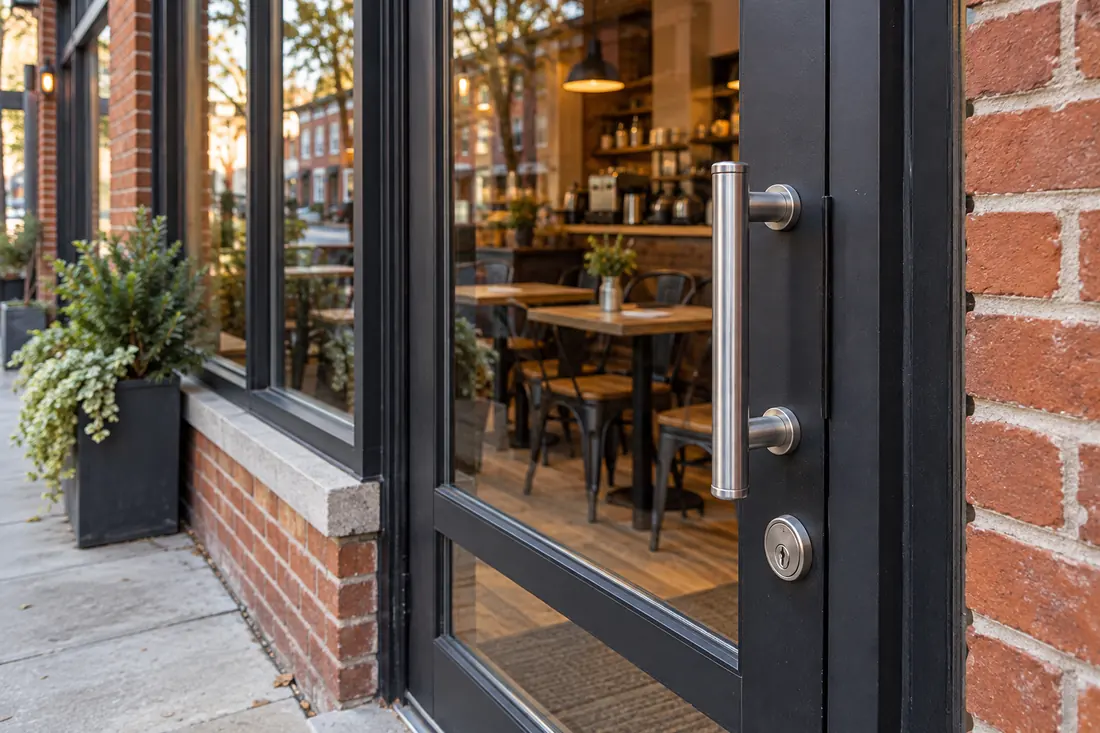
A retail glass door, a tenant’s office door and a shared lobby entrance are different systems. Tell us which door is affected, whether it opens and closes normally, and whether you can currently secure the space. For a Canton shop or Downtown suite, include the business entrance and the person meeting the visit. Delivery doors and rear entrances should be named explicitly rather than assumed from the public address.
Plan access after a staffing change
Make a list of affected doors, existing key holders and anyone who must retain entry. Rekeying suitable cylinders may let the business keep usable hardware while changing key access. Where a building already uses a master-key system, involve the property manager before altering it. Do not assume that matching keys across a few doors is the same as designing or modifying a master-key system.
Coordinate with the building’s other systems
A door may combine mechanical locks with an electric release, an access reader, a closer or exit hardware. Describe those components and any alarm connection. Some work requires the building’s access-control provider or another specialist. Ask what is supported before a visit is arranged. No change should defeat normal exit operation or leave a shared security system working differently without the responsible property contact knowing.
Make the handoff practical
Have the approved contact test the entry in its normal operating mode. Confirm which keys were supplied, which openings were changed and whether another issue remains. A useful record identifies the scope and charges rather than simply saying that a lock was changed. If business hours or an occupied lobby limit the work window, communicate the allowed appointment period in advance.